The platform

One stack. Seven layers. No seams.

Everything a brokerage, prop firm or fintech needs to operate — built together, tested together, and operated together. You configure it and put your brand on it.

Launch window
2 weeks
Asset classes
Four
Deployment
Dedicated
Branding
Fully yours
The stack

Seven layers. One vendor.

Most providers sell you one layer and leave you to source the other six. Every integration seam becomes your problem, your timeline, and your incident at 3am. We build and operate the whole stack, then hand it over under your brand.

Assembled and operated as one system

  1. 01

    Trading engine

    Matching, order routing, and multi-asset execution across crypto, FX, equities and commodities.

  2. 02

    Payment rails

    Card and alternative payment methods across Africa, Asia and LATAM, with settlement on supported corridors.

  3. 03

    Card issuing

    Branded physical and virtual cards, per-card and per-transaction economics built in.

  4. 04

    Funded-trader system

    Challenge plans, add-ons, evaluation rules, retries and payout logic.

  5. 05

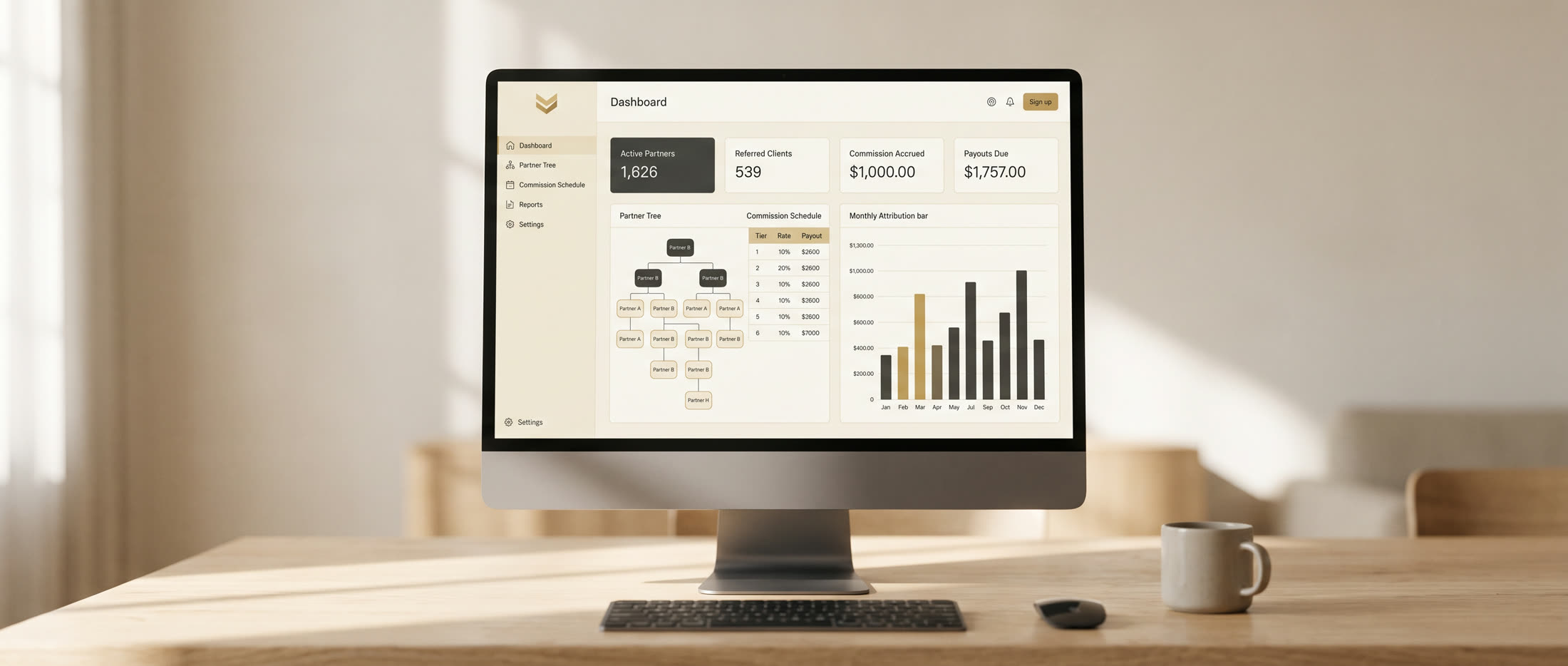
    Partner & IB network

    Multi-tier attribution, commission schedules, and partner reporting.

  6. 06

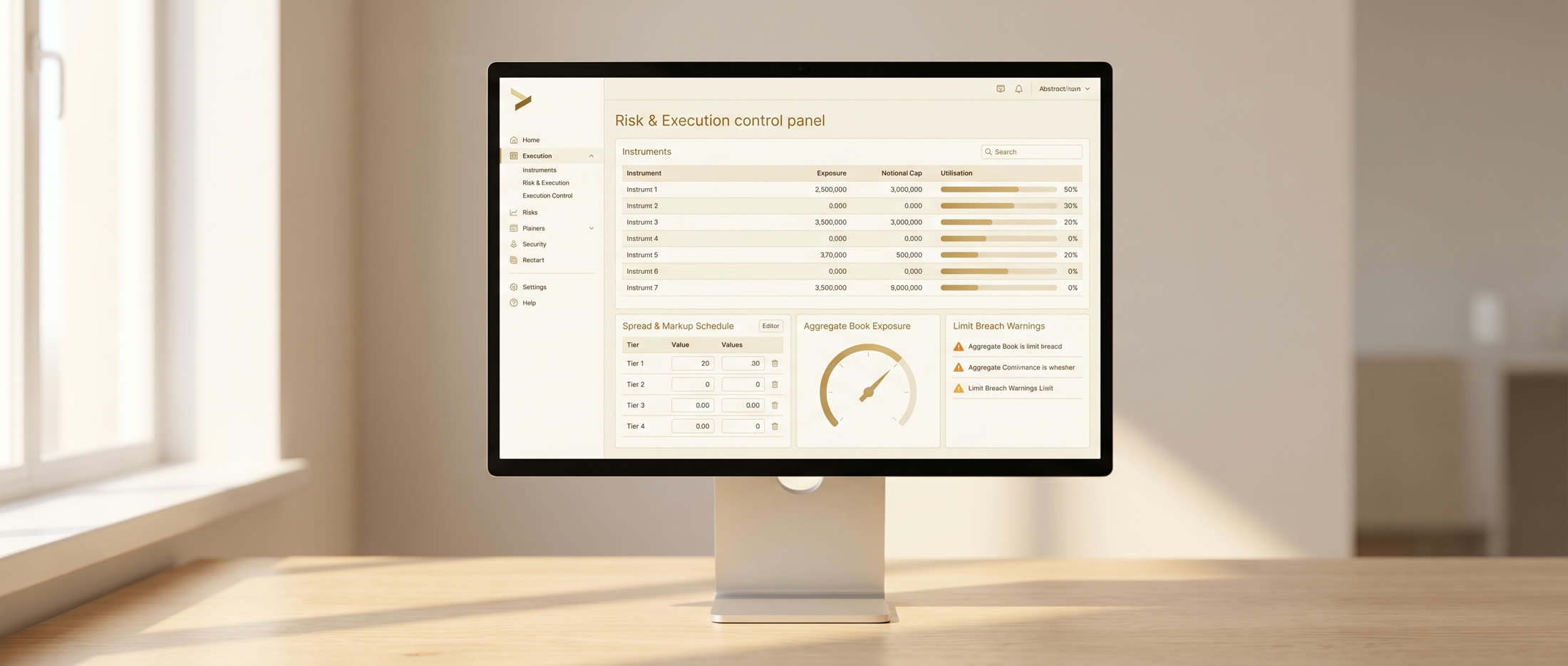
    Risk & execution controls

    Exposure limits, spread and slippage configuration, and per-instrument risk policy.

  7. 07

    Operations console

    Administration, compliance workflows, reconciliation and reporting in one interface.

Open breaks
12
Matched today
1,567
Payouts pending
$450,320
Settled volume
$2.3M

Reconciliation break queue

ReferenceTypeAmountCorridorStatusAge
RC-41920Settlement$12,480.00NG → NGOpen4h
RC-41921Payout$3,150.00KE → KEOpen6h
RC-41922Settlement$48,900.00AE → AEOpen11h
RC-41923Refund$740.00ID → IDOpen13h
RC-41924Payout$21,300.00BR → BROpen18h
RC-41925Settlement$9,060.00IN → INOpen22h
RC-41926Payout$5,410.00NG → NGOpen1d
RC-41927Settlement$33,720.00ZA → ZAOpen1d
RC-41928Refund$1,290.00PH → PHOpen1d
RC-41929Settlement$17,850.00VN → VNOpen2d
RC-41930Payout$8,640.00IN → INOpen2d
RC-41931Settlement$26,110.00AE → AEOpen2d

Click a row to work it

Matched volume

Break detail

Open
Reference
RC-41920
Type
Settlement
Amount
$12,480.00
Corridor
NG → NG
Ageing
4h
Illustrative interface — not a live system
Operations console

The panel your team actually lives in.

Most vendors treat administration as an afterthought and ship a thin CRM. Your operations team spends more hours here than your customers spend trading.

01

Role-based administration

Granular permissions per desk, per region, per function. Every privileged action is attributed to a named operator and written to an immutable log.

  • Per-desk permission sets
  • Named-operator attribution
  • Immutable audit trail
  • Session and device policy
02

Compliance workflows

Onboarding review, document verification, sanctions and PEP screening, and case management shaped around the licence you hold.

  • Configurable KYC tiers
  • Sanctions / PEP screening
  • Case queues with SLA
  • Regulator-ready exports
03

Reconciliation

Positions, payments and ledger reconciled continuously rather than at month end, with breaks surfaced as they occur.

  • Continuous position recon
  • Payment-to-ledger matching
  • Break detection and ageing
04

Reporting

Operational, financial and regulatory reporting from one source, scheduled or on demand.

  • Scheduled report delivery
  • Custom report builder
  • Immutable period snapshots
05

Client lifecycle

A single record per client spanning onboarding, funding, activity, support history and risk posture.

  • Unified client timeline
  • Support history inline
  • Risk flags surfaced in context
One system

Bought separately, it never quite fits.

Sourced separately, these arrive from five to seven vendors. Each has its own contract, its own SLA, its own outage and its own integration — and when something breaks between two of them, neither owns it.

We build and operate all eight. One contract, one launch date, one engineer who knows your deployment, and no seam between layers for a problem to fall through.

Scroll to assemble
01Trading enginePlatform vendor
02Payment railsProcessor
03Card issuingIssuer + sponsor
04Funded-trader systemProp-tech vendor
05PAMM & MAMAllocation vendor
06Partner & IB networkAffiliate vendor
07Risk & executionRisk vendor
08Operations consoleCRM vendor
The whole stack

Eight systems. One vendor. One launch date.

A brokerage or prop firm needs all eight of these on day one. The vendor market supplies them in fragments — the terminal from one, the processor from another, cards from a third — so the launch becomes an integration project across five to seven contracts, each with its own outage and its own finger to point. Here is everything we have built, layer by layer, in full.

“Elsewhere” describes how often a layer is included by vendors in this market as a category. We do not name them.

01

Trading engine

Matching, pricing and execution across four asset classes on a single account and a single margin position.

Asset classes
  • Crypto spot and derivatives
  • Foreign exchange majors, minors and exotics
  • Equities and equity CFDs
  • Commodities, metals and energy
  • Indices
  • One account and one margin position across all of them
Order types
  • Market
  • Limit
  • Stop
  • Stop-limit
  • Trailing stop
  • One-cancels-the-other (OCO)
  • Bracket orders with attached take-profit and stop-loss
  • Partial fills and average-price accounting
Pricing and liquidity
  • Liquidity aggregation across multiple venues
  • Configurable spread and markup per instrument group
  • Market-data feeds with failover
  • Per-instrument leverage and margin schedules
  • Session, holiday and rollover calendars
  • Swap and financing accrual
Trader features
  • Charting with indicators, drawing tools and saved layouts
  • Copy trading with per-follower allocation and risk caps
  • Watchlists, alerts and price notifications
  • Position, order and trade history with statements
  • Demo accounts running the same engine as live
Distribution & compatibility
  • MetaTrader 4 and 5 bridging for firms with an existing MT book
  • Web, iOS, Android and tablet clients under the partner’s brand
  • Client applications localised per market, including right-to-left layouts
  • Multi-currency account denomination
  • Migration of an existing client book with positions and history

Availability of any instrument, payment method, card programme or corridor depends on the licences you hold and on local law. Scoping establishes what is actually available to you before it appears in a build plan.

Provider network

The software is rarely what delays a launch.

Sourcing a liquidity provider, an acquirer, a local-method aggregator, a BIN sponsor, a settlement bank and a screening vendor — each with its own commercial minimum, its own underwriting and its own integration — is what takes the year. We already hold those relationships and the integrations are already built, so you join an existing arrangement instead of starting six procurement cycles at once.

We do not publish provider names. The same discretion that keeps your relationship private keeps theirs.

01

Liquidity & market data

Pricing and fills for four asset classes, plus the feeds the platform quotes from.

On your own

Approach providers individually, meet each commercial minimum, negotiate spreads without volume history, then build and certify a separate integration per venue.

What we bring
  • Existing relationships across bank and non-bank liquidity
  • Aggregation already built, so venues can be added or dropped as configuration
  • Failover between feeds rather than dependence on a single source
  • Commercial terms informed by aggregate volume rather than a first-time book
  • Certification and conformance work handled by our engineers
What this does not mean

We introduce and we integrate. We do not approve.

Every provider underwrites you

Acquirers, sponsors and banks each run their own checks on your business, your directors and your model, and any of them can decline. An introduction improves your odds and shortens the queue. It does not decide the outcome.

We do not obtain your licence

Authorisation is between you, your counsel and your regulator. We do not give regulatory or legal advice and are not a substitute for a compliance function.

Some markets we will decline

If a corridor or a model cannot be supported properly, we say so at scoping instead of taking a fee and discovering it during your integration.

Integration reference

For whoever on your team has to build against it.

Somewhere in every evaluation a developer is asked whether this is sane to integrate with, and the marketing site never answers the three questions that decide it: are webhooks signed, are retries idempotent, and how is money represented. Here they are.

REST over HTTPS, JSON in and out, versioned in the path so an upgrade is your decision rather than ours.

TransportHTTPS only, TLS 1.2 floor. Plain HTTP is refused rather than redirected.
VersioningVersion in the path. A breaking change ships as a new version; the previous one keeps working with notice.
AuthenticationPer-environment API credentials, scoped by capability. Separate credentials for sandbox and production, and they are not interchangeable.
IdempotencyEvery write accepts an idempotency key. A retried request returns the original result instead of creating a second payment.
PaginationCursor-based. Offsets drift when rows are inserted mid-listing, so we do not use them.
Rate limitsPer credential, returned in response headers, with limits agreed to your expected volume rather than a blanket default.
ErrorsStable machine-readable code, a human-readable message, and a request identifier to quote at support.
API surfaceIllustrative — shape only
POST /v1/payouts
Idempotency-Key: 9f2c-4a71-b0e8

{
  "amount": 250000,          // minor units
  "currency": "GBP",         // ISO 4217
  "destination": "acct_...",
  "reference": "INV-2291"
}

201 Created
{
  "id": "pyt_...",
  "status": "pending",
  "created_at": "2026-08-21T09:14:02Z"
}

Payloads above illustrate shape, not a published schema. The contract that binds an engagement is the integration documentation issued with it, and your engineers get sandbox access during evaluation rather than after signature.

Where the seams are

Everyone covers most of it. Most of it isn't a platform.

A missing layer is not a discount — it is a second vendor, a second contract, a second integration, and a support boundary that runs straight through your customer's worst day.

CapabilityPlatform-only vendorsLiquidity-led providersCRM-led providersKrexum
Multi-asset trading
Payment rails
Card issuing
Funded-trader system
Partner / IB network
Risk & execution controls
Operations console
Coverage29%57%71%100%

Categories describe common vendor shapes in this market rather than any single named provider. Coverage reflects what a buyer must source elsewhere to launch.

Risk & execution controls

Policy you set, applied the same way every time.

Exposure managed per instrument and per client tier, enforced at order entry rather than left to a dealer’s judgement under pressure.

  • Per-instrument and per-tier caps
  • Aggregate book exposure
  • Versioned spread and markup schedules
  • Breach alerts with full parameter history
Compliance & onboarding

Built around the licence you actually hold.

Verification tiers, screening and case management configured to your regime, with the evidence trail a regulator will ask for.

  • Configurable KYC tiers
  • Sanctions and PEP screening
  • Case queues with SLA tracking
  • Regulator-ready export
Partner & IB network

Attribution that survives an audit.

Multi-tier partner structures, commission schedules and payout runs, with every referral attributable end to end.

  • Multi-tier partner trees
  • Per-tier commission schedules
  • Accrual and payout runs
  • Partner-facing reporting
Edge cases

Every vendor demos the happy path. Ask about the bad day.

These are the failures that decide whether a platform survives its first year in production. We list them because we have had to build for them.

Common outcome

A best-effort reconstruction from logs that have partly rotated.

What we do

Decisions, policy versions and operator actions are retained as records rather than logs, with the model and rule version that produced each outcome.

Technical

The questions every buyer asks on the first call.

Deployment model
Dedicated environment per partner. No shared database, no shared credentials, no noisy-neighbour risk between partners.
Branding scope
Domain, platform UI, operations console, transactional email, statements and payment pages. No Krexum badge anywhere in the partner surface.
Data residency
Region selected per partner to match the licence and the regulator you answer to.
Integration surface
REST and webhook APIs across accounts, orders, payments and reporting. Sandbox provisioned at kickoff, not after launch.
Authentication
SSO for operator accounts, multi-factor enforced on privileged roles, hardware-key support available.
Availability
Monitored continuously with defined incident response. Status and incident history shared with partners rather than hidden.
Exit terms
Your data is yours. Full export in documented formats on request, during the relationship and at the end of it.
What stays with us
Platform engineering, infrastructure operations, security patching and roadmap delivery. You run the business; we run the stack.